


Yachty Dice Game – Yatzy
4.23.01K Reviews
App Specs
- Version
- 1.3.2
- Updated On
- License
- Free
- Downloads
- 500,000+
- Developer
- Cessabit Games
- Categories
- Board
- Platform
- Android
Screenshots

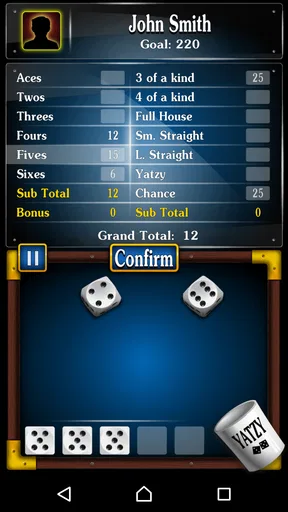
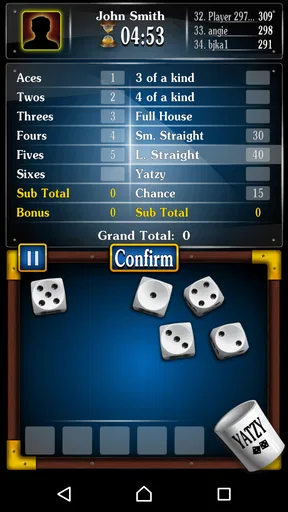
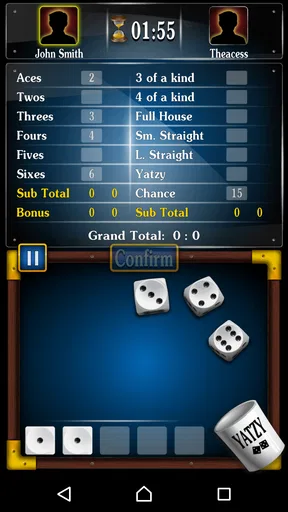
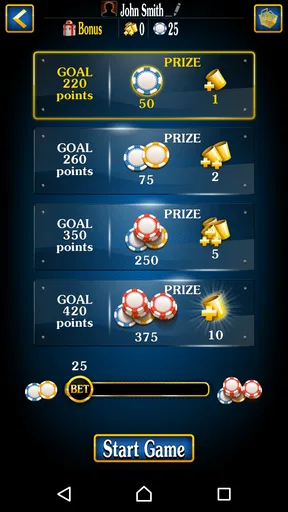

 Analysis by AppCompare
I like dice games that are easy to explain but still give me a reason to think before every choice. Yachty Dice Game – Yatzy fits that space well: it is a free board game from Cessabit Games built around familiar dice-rolling rules, with the option to play with buddies or offline. I can start a round quickly, understand the basic aim without reading a long tutorial, and still find small decisions that matter when a scorecard begins to fill up.
That simplicity is the main appeal, but it also defines the limits. This is not a large strategy game with a campaign, a deep progression system, or a constantly changing world. It is a compact digital version of a classic dice pastime. In my experience, that makes it particularly suitable for short breaks, casual gatherings, and players who want something social without a steep learning curve. It is less convincing for anyone looking for elaborate online competition or a long-term challenge built around new content.
How the current version feels to play
The current release is version 1.3.2, and the game remains focused on the central Yatzy-style loop rather than surrounding it with unnecessary complexity. I roll the dice, consider which result is worth keeping, roll again when appropriate, and then decide where the outcome belongs on the scorecard. The tension comes from managing imperfect rolls: sometimes I chase a valuable combination, while other times I accept a modest result to avoid wasting a category.
That makes the game approachable for families and occasional players. The age guidance is Everyone 10+, which feels reasonable for a board-game format that relies more on arithmetic, choices, and friendly competition than on complicated controls. A new player can watch one round and understand the rhythm. Someone already familiar with Yatzy can begin making meaningful decisions immediately.
The offline option is one of the most useful parts of the design. I can imagine opening it during a journey, while waiting for an appointment, or when I want a quick solo distraction without depending on a connection. Offline play also changes the mood: instead of treating every round as a competitive event, I can use it as a quiet way to pass a few minutes and practice judging risk.
Playing with buddies gives the same basic rules a more personal feel. Dice games work well in groups because every turn is easy to follow, and nobody needs to spend several minutes learning a complicated interface before joining. The trade-off is that the experience depends heavily on the people playing. With friends who enjoy relaxed banter, the simple format is a strength. With players expecting a highly organized competitive environment, it may feel lightweight.
The game has attracted a 4.2 average from around 16 thousand ratings, alongside roughly 3 thousand written reviews and over 500 thousand installs. Those figures suggest that the straightforward format has found a sizeable audience, while also reminding me that this is a focused casual title rather than a specialist tournament platform. The free entry point makes it easy to try before deciding whether the available extras are worthwhile.
Worth Reading Before You Choose

EA SPORTS FC Mobile 26 Is a Bigger Football Game, but It Takes Time

Flipboard Shows What News Apps Must Do Beyond the Feed

Switching to Android Auto Means Rethinking Your Driving Routine

Google Calendar Makes a Crowded Week Easier to Manage

Ludo King Makes the Most of the Minutes Between Plans

Baby Panda World Brings Quick Play to Modern Phones, but Its Game Library Feels Busy
The decisions hidden inside a simple scorecard
The most interesting part is not the act of rolling. It is deciding when to stop pursuing an attractive combination. A tempting roll can encourage me to keep chasing a stronger result, but every extra attempt risks leaving me with a poor category choice. I find it helpful to treat each turn as a small budget of opportunities rather than as a hunt for the biggest possible number.
One practical habit is to look at the empty categories before rolling again. If a category is difficult to complete and the current result could safely support another one, I may choose the reliable score instead of gambling. This is especially useful late in a round, when there are fewer places to recover from a bad turn. The game does not need advanced systems to create this kind of decision-making; the scorecard itself supplies the pressure.
Another useful approach is to separate short-term excitement from the overall score. A dramatic combination can be satisfying, but a steady series of sensible choices often matters more than one ambitious attempt. I enjoy this because it gives experienced players a small edge in judgement without making beginners feel helpless. Luck remains important, yet the player still has control over how that luck is used.
For a group session, I would recommend agreeing on the tone before starting. If everyone wants a relaxed game, players can talk through their choices and teach newcomers as turns unfold. If the group prefers a sharper contest, each person can make decisions independently and compare results at the end. This flexibility is a genuine strength, although it comes from the nature of the board game more than from a large collection of modes.
What the developer’s updates mean in practice
Cessabit Games has brought the title to its current version, 1.3.2, after its original release on October 11, 2016. I see that history as a sign of a product that has stayed available and recognizable over time rather than being replaced by a completely different concept. The important point for a new player is that the game’s identity is clear: it remains a compact Yatzy-style dice experience.
For existing users, a version number by itself does not change how a round should be approached. The core value is still the same quick scorecard decision-making, and that is good news for people who already enjoy the format. Returning players do not need to relearn an elaborate progression system or adjust to a new genre. At the same time, I would not treat the current version as evidence that the game has transformed into a much broader board-game collection. Its appeal is its consistency.
That consistency also helps explain why the title can suit different kinds of players. A newcomer gets a familiar ruleset, while a returning player gets a recognizable place to play it digitally. The update history matters most as reassurance that the app has an established identity, not as a promise of features that are not part of the experience I reviewed.
Because the game is free, the first decision is simple: install it and see whether the dice-and-scorecard loop holds your attention. The more important decision comes later, when the app presents optional purchases. The listed in-app purchase range runs from $1.99 to $29.99 per item, so I would approach those extras carefully. I would first play enough free rounds to decide whether I genuinely want to support or extend the experience rather than buying impulsively after one lucky result.
A realistic everyday use case
Imagine a small family gathering where one person knows Yatzy and another has never played. This game can bridge that gap better than a complex digital board game. I would put a phone or tablet where everyone can see it, explain the purpose of the scorecard, and let the first few turns demonstrate the choices. The experienced player can discuss risk, while the newcomer learns by making decisions instead of reading instructions for a long time.
It also works for a short solo routine. During a ten-minute wait, I can play a few turns without committing to a story, a large map, or a lengthy match. If I am interrupted, the small scale is less frustrating than leaving a demanding game halfway through. The offline capability makes this scenario more dependable when connectivity is inconvenient.
There is a useful social distinction here. The game is good for sharing a device and discussing turns, but it should not be confused with a full online board-game service. If my priority is a persistent competitive community, matchmaking, detailed player profiles, or a broad collection of tabletop titles, I would look elsewhere. Yachty Dice is better when the goal is immediate, understandable play.
Where it compares well with other dice games
Compared with a physical dice set and paper scorecard, the app is more convenient. I do not need to bring dice, find a pencil, or remember how to calculate every category. The digital format also reduces setup time, which matters when I only have a short break. The physical alternative still wins for players who enjoy handling components, gathering around a table, and keeping the conversation separate from a screen.
Compared with more elaborate board-game apps, this title is easier to enter but narrower in scope. A larger digital board-game adaptation may offer several systems, campaigns, tutorials, or strategic layers. That can be rewarding for dedicated players, but it also creates more preparation and a higher mental load. I would choose Yachty Dice when I want the rules to stay in the background and the decisions to arrive one turn at a time.
Compared with purely luck-driven dice games, it gives me more ownership of the result. The roll is random, but selecting what to keep and where to record it creates a meaningful trade-off. Compared with deep strategy games, however, it offers less room for long planning. A player who wants dozens of interacting systems may find the scorecard too restrained after repeated sessions.
Small weaknesses that affect the recommendation
The biggest limitation is repetition. The central loop is enjoyable because it is clear, but that same clarity means the game can begin to feel familiar quickly if I play for long stretches. I would not recommend it as a sole everyday game for someone who needs constant novelty. It is better as a reliable side activity that I can return to when I want uncomplicated competition.
The social experience also depends on expectations. “Playing with buddies” sounds appealing, but a casual dice game does not automatically provide the same structure as a dedicated multiplayer platform. If my friends are in the room or ready to participate in the intended way, the format works naturally. If I want robust remote competition with organized opponents, another category of app would likely suit me better.
Optional purchases are another point to consider. The free download lowers the barrier to entry, but the presence of items across a fairly broad price range means I would pay attention before spending. My advice is to judge the basic game first. If the free experience already supplies the kind of short, repeatable play I want, there is no reason to treat purchases as necessary for enjoying the concept.
Device compatibility is reasonably accessible for modern users because the minimum requirement is Android 6.0. Still, anyone using an older device should check compatibility before planning a group session. That is a practical detail rather than a gameplay criticism, but it matters when the app is meant to replace a physical game at a gathering.
Who should try it, and who should skip it
I would recommend it to casual board-game fans, people who already enjoy Yatzy, families wanting a quick shared activity, and players who appreciate offline games. It is also a sensible choice for someone who wants to learn the basic decision-making of a dice scorecard without investing in a larger tabletop system. The free starting point makes experimenting easy.
I would be more cautious about recommending it to players who need a campaign, extensive customization, a large range of board games, or a highly competitive online ladder. Those expectations go beyond what this focused format is designed to provide. Likewise, if I dislike repeating a familiar turn structure, I would probably enjoy it in short sessions rather than as a main game.
One of the best ways to get more from it is to set a personal rule before playing: either aim for consistent scoring, deliberately practice riskier choices, or focus on teaching another player. That gives each session a purpose without pretending the game has a deeper progression system. It also helps prevent the common problem of opening a simple dice game repeatedly without knowing what kind of experience I want from it.
What I would watch going forward
For future updates, I would be interested in improvements that preserve the quick nature of the game while making repeated sessions feel fresher. Clearer ways to organize buddy play, more useful guidance for new players, or thoughtful options around how rounds are handled could add value without turning the app into something complicated. I would prefer that kind of refinement over features that distract from the scorecard.
Existing users should judge future changes by whether they improve convenience without weakening the familiar rhythm. New players should do the opposite: try the current version first and decide whether the basic loop is enjoyable before expecting future additions. The release history gives the game an established foundation, but it should not be read as a guarantee of any particular upcoming feature.
My final view is positive but specific. This is a good free board game for quick dice sessions, offline play, and relaxed matches with friends. Its strongest quality is that it gets to the meaningful choice quickly, while its main weakness is that the same focused design can feel limited over time. If that balance matches what you want, Yachty Dice Game – Yatzy is easy to recommend as a convenient digital take on a familiar pastime. If you are searching for a deep strategy platform or a broad multiplayer hub, I would choose a different kind of game instead.
Pros
- Quick rounds make it easy to play during short breaks.
- Simple dice mechanics are accessible for beginners.
- Several scoring options add variety between games.
- Works well for casual play without a steep learning curve.
- Clear score tracking helps prevent calculation mistakes.
Cons
- Gameplay may feel repetitive after extended sessions.
- Luck can outweigh strategy in important turns.
- Some features may require an internet connection.
- Ads can interrupt the flow in the free version.
- Limited customization may disappoint experienced players.
FAQs for Yachty Dice Game – Yatzy
What is Yachty Dice Game – Yatzy?
Yachty Dice Game – Yatzy is a digital dice game based on the classic Yahtzee-style rules. Players roll a set of dice, choose which results to keep, and try to complete scoring combinations such as three of a kind, a full house, a straight, or five matching dice. The game is designed for quick sessions and is suitable for casual players who enjoy simple strategy and luck-based gameplay.
How do you play Yachty Dice Game – Yatzy?
Each turn normally gives you several dice rolls, allowing you to keep useful dice while rerolling the others. After using the available rolls, you select a scoring category for that turn. Every category can generally be used only once, so choosing when to claim a high-value combination is important. The winner is the player with the highest total score after all categories have been completed.
Can I play Yachty Dice Game – Yatzy offline?
The game is well suited to short offline sessions because its core gameplay does not require constant communication or complex online features. However, the availability of offline play, advertisements, saved progress, and certain modes can depend on the version installed and the device platform. It is best to check the app listing and test the game without an internet connection before relying on it while traveling.
Is Yachty Dice Game – Yatzy free to download and play?
Yachty Dice Game – Yatzy may be available as a free download, but free access can include advertising, optional purchases, or restrictions on particular features. Before installing, review the store page for the current pricing information and in-app purchase details. If you prefer uninterrupted play, check whether the game offers a paid ad-removal option or another premium upgrade.
Is Yachty Dice Game – Yatzy suitable for children and beginners?
The basic rules are easy to understand, making Yachty Dice Game – Yatzy approachable for beginners and family play. The main challenge comes from deciding which dice to keep and when to use each scoring category. Parents should still review the game’s age rating, advertising, and purchase settings, especially on shared devices, since these details may vary between Android and iOS versions.


